Army Appropriations Clause
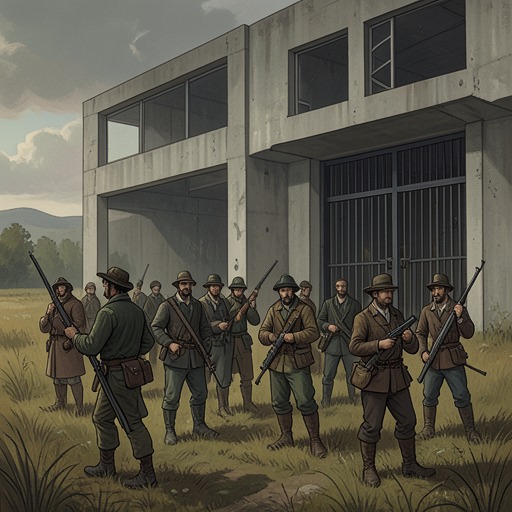
Federalist PapersThe Army Appropriations Clause limits appropriations for the support of an army to a period no longer than two years. In the defense of the proposed Constitution, it is not an absolute ban on a standing army but a recurring check on the legislature’s power to maintain one: Congress must return to the question of military funding, make a new decision, and do so before its constituents. Its importance lies in turning suspicion of military power into a continuing occasion for political accountability.
Text and Constitutional Setting
The clause appears in the plan’s provisions governing national legislative authority. The legislature, rather than the Executive, holds the power to raise armies; the funding restriction qualifies that legislative discretion by forbidding an appropriation for an army’s support for any longer than two years. The distinction matters: the proposed Constitution neither commands the maintenance of a peacetime army nor places the power to raise troops solely in the Executive. It permits military provision while ensuring that its financial authorization cannot become permanent through a single legislative act.
This design belongs to a broader defense of federal authority against accusations that the proposed Constitution would destroy local government or liberty. Hamilton argues that the Necessary and Proper Clause and the Supremacy Clause do not create powers beyond those granted by the Constitution: federal laws are supreme only when made pursuant to constitutional authority. The army-funding limit is a more specific example of the plan’s approach to power, placing an express constraint inside a grant of national capacity rather than relying on a general promise of restraint.
The Two-Year Check
The safeguard’s force, in the argument, comes from repetition. At least once every two years, the national legislature must deliberate on whether a military force should remain in being, reach a fresh resolution, and declare its judgment by formal vote before its constituents. A legislature willing to support an army is therefore not free to make that choice once and insulate it from reconsideration. The decision returns at a fixed interval, where representatives must answer publicly for it.
The provision also prevents Congress from placing permanent funds for an army under the control of the Executive. Even if legislators were incautious enough to repose that confidence in the Executive, the funding restriction would deny them the power to do so. The constitutional restraint thus works through both time and institutional responsibility: military support requires renewed legislative action, and the Executive cannot inherit an indefinitely funded army from an earlier decision.
The two-year cycle also makes the question politically visible. Opposition members in the national legislature can challenge the need for military support whenever the appropriation comes forward, bringing public attention to the issue. If a majority is disposed to exceed proper limits, the debate can warn the community and give it an opportunity to respond. State legislatures, described as vigilant and suspicious guardians of citizens’ rights, can likewise scrutinize the national rulers and sound an alarm if they see an improper measure. The recurring vote is therefore not only a rule about the duration of money; it creates repeated points at which political opposition and state-level vigilance can act.
Comparison with State and British Practice
The argument contrasts the constitutional funding limit with state provisions that appeared to oppose peacetime military establishments. In two state constitutions, the language was not an unequivocal prohibition: it said that standing armies ought not to be kept up in peacetime, rather than declaring that they shall not be. The wording, Hamilton contends, reflects a conflict between jealousy of military power and recognition that an absolute exclusion could be unwise or unsafe. Such a caution might yield when the legislature considered military provision necessary.
The proposed Constitution’s rule is presented as more effective because it does not attempt an imprudent absolute ban. It allows provision for national exigencies but requires the legislature to renew its decision and limits each appropriation to two years. Hamilton further invokes Pennsylvania as evidence that a cautionary state provision could be treated as an admonition when circumstances or legislators’ judgments favored departure from it. Against that uncertain restraint, the federal limit is described as a rule with a salutary operation precisely because it combines military capacity with a binding time limit.
The comparison with Great Britain turns on the difference between legal authority and political practice. The British Parliament may in practice vote army supplies annually, but the British Constitution sets no limit on how long the legislature may authorize them. The proposed American rule, by contrast, makes two years the longest permissible term. Hamilton emphasizes that the British House of Commons is elected for seven years and criticizes the limited proportion of the population represented in its elections and the influence of corruption; yet, despite the British legislature’s formally unlimited discretion, it has not in practice extended appropriations beyond a year. He argues that representatives of the United States, freely elected by the whole body of the people every second year, can safely be entrusted with a discretion expressly capped at two.
The Threat of Military Power and the Union
The clause addresses a concern that opposition to the proposed Constitution had raised: that national authority might produce a standing army dangerous to liberty. Hamilton argues that the Constitution supplies an effective guard, while the recurring appropriations debate ensures that the danger cannot be quietly accumulated without repeated legislative decisions. A large army capable of seriously threatening liberty, he reasons, would have to be formed through progressive increases. Such growth would require not merely a temporary alignment between legislature and Executive, but a conspiracy sustained over time and through successive changes in a representative body elected every two years.
The argument also makes the Union itself part of the security calculation. Hamilton warns that a Constitution inadequate to national defense and preservation of the Union could leave America exposed to as many standing armies as it was divided into states or confederacies. Those separate establishments could grow progressively until their costs burdened property and their presence threatened liberty. The contrast is not simply between an army and no army, but between recurrently authorized military provision under a united government and the multiplication of forces that disunion might produce.
The two-year limit thus serves as a constitutional compromise between capacity and vigilance. It does not make military power impossible; it makes continued support answerable to the representatives and public at regular intervals. In Hamilton’s case for the proposed Constitution, the clause turns a fear of standing armies into an argument for a government strong enough to defend the Union yet unable to fund an army indefinitely without returning to the people’s representatives for another vote.